
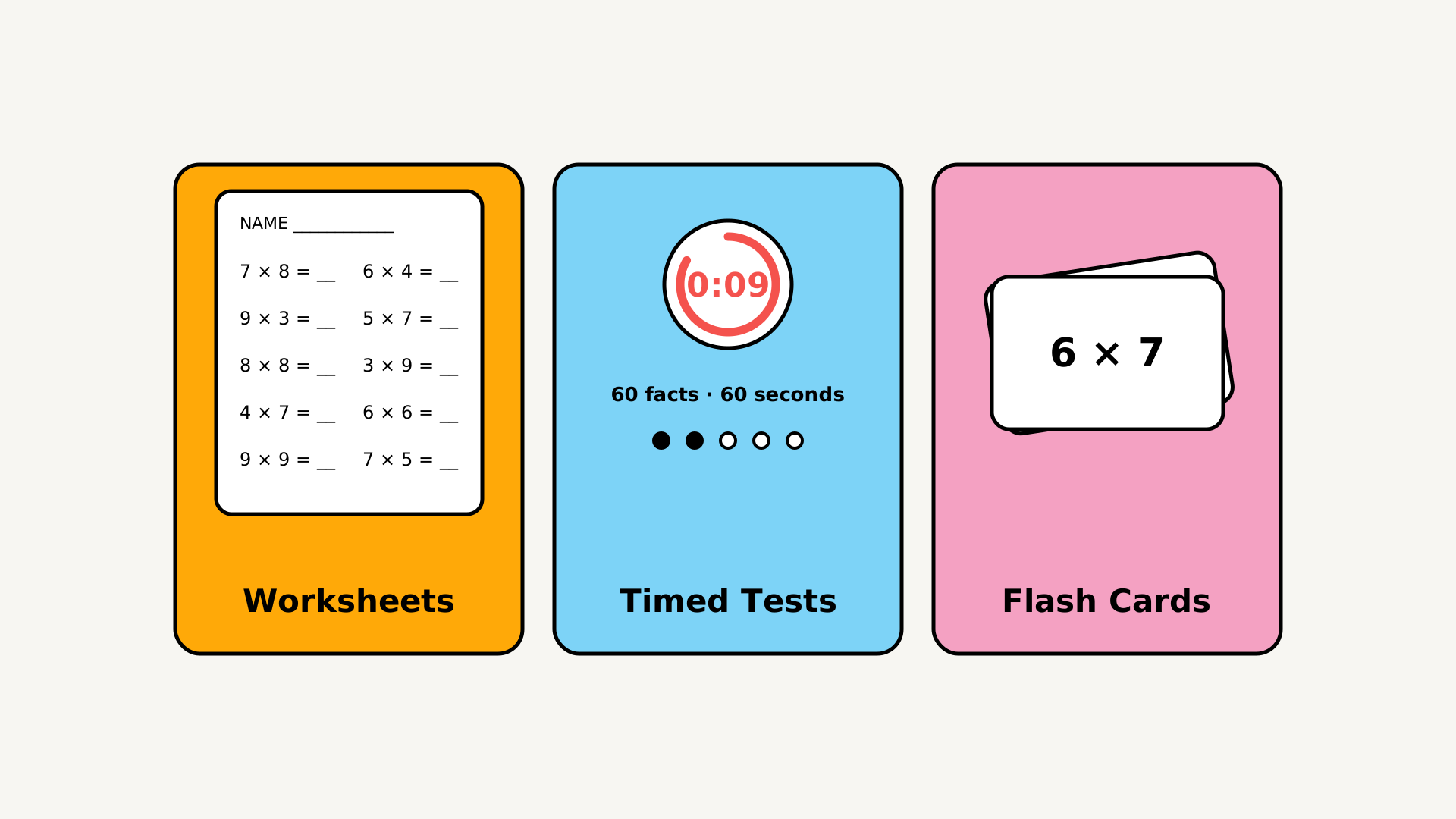
When we talk about math fluency, it’s easy to fall into the speed trap. How many math facts can students recall? How quickly can they answer?
But picture two 3rd graders facing the same problem: 7 × 8. One searches their memory, draws a blank, and stops. The other thinks, “5 × 8 is 40, and 2 × 8 is 16. That’s 56.” The difference isn’t simply who memorized the fact. The second student has another way in.
That’s numerical flexibility.
A fluent math thinker can see numbers in different ways, recognize relationships, use what they know to solve what they don’t, and choose a strategy that makes sense for the problem in front of them.
Fluency isn’t just fast recall. Fluency grows from flexibility.
And that flexibility starts long before multiplication.
It begins when a young student stops counting every dot on a page and starts subitizing, seeing a group of four without needing to count each one. It grows when 47 becomes more than “four tens and seven ones.” It can also be 40 + 7, 50 − 3, or a quantity sitting between 40 and 50.
Eventually, 7 × 8 becomes more than an isolated fact a student either remembers or doesn’t. It becomes a relationship they can reason through.
Ask three simple questions that help students build fluency.
(1) How do you see it?
Open Saddle Up Subtraction (or another Struggly task that connects to your learning goal) and simply ask, What do you notice? What do you wonder?
“What’s the answer?” communicates that right answers are all that matters, and gives us very little information about student understanding.
“How do you see it?” gives us a window into their thinking.
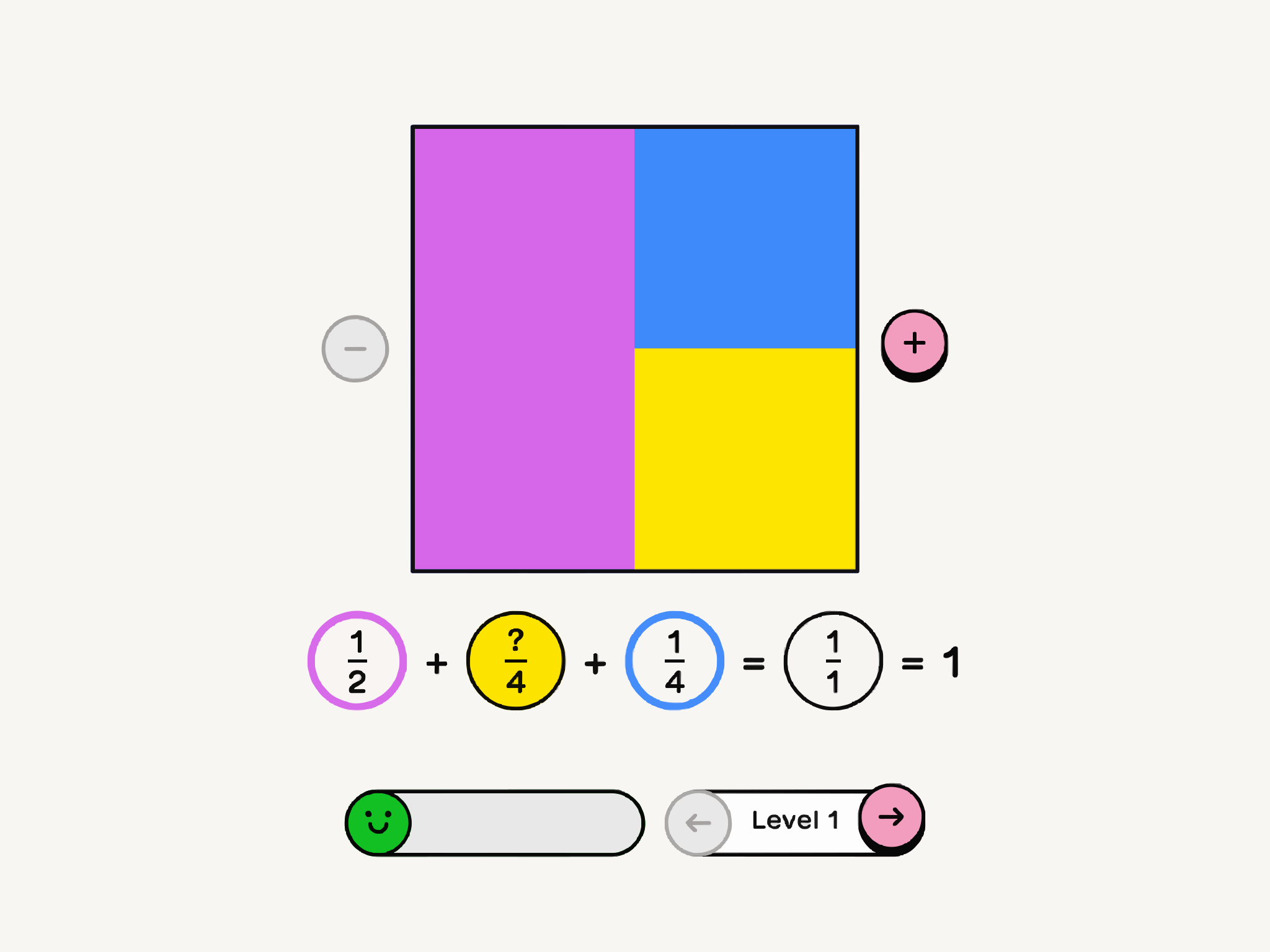
Encouraging students to "see the math" gets their brains visualizing, thinking and connecting beyond memorized facts. Some students may need practice in "visualizing" math in multiple ways.
In Struggly’s Subtraction Blast, early learners might begin by counting each visual element one at a time. As their number sense develops, they begin seeing groups and noticing different ways to compose and decompose a quantity. Ten is no longer just a stop on a counting sequence. It can be 5 + 5, 6 + 4, 7 + 3, or something else entirely.
The same thinking carries into more complex math. With 7 × 8, one student might see (7 × 7) + 7. Another might use (5 × 8) + (2 × 8). Another might picture a 7 × 8 array and break it into smaller parts.
The goal isn’t for every student to use the same strategy. The goal is for students to develop enough understanding that they have more than one strategy available.
(2) Can you show it another way?
One representation can help a student solve a problem. Multiple representations help them see how ideas connect.
Take fractions.
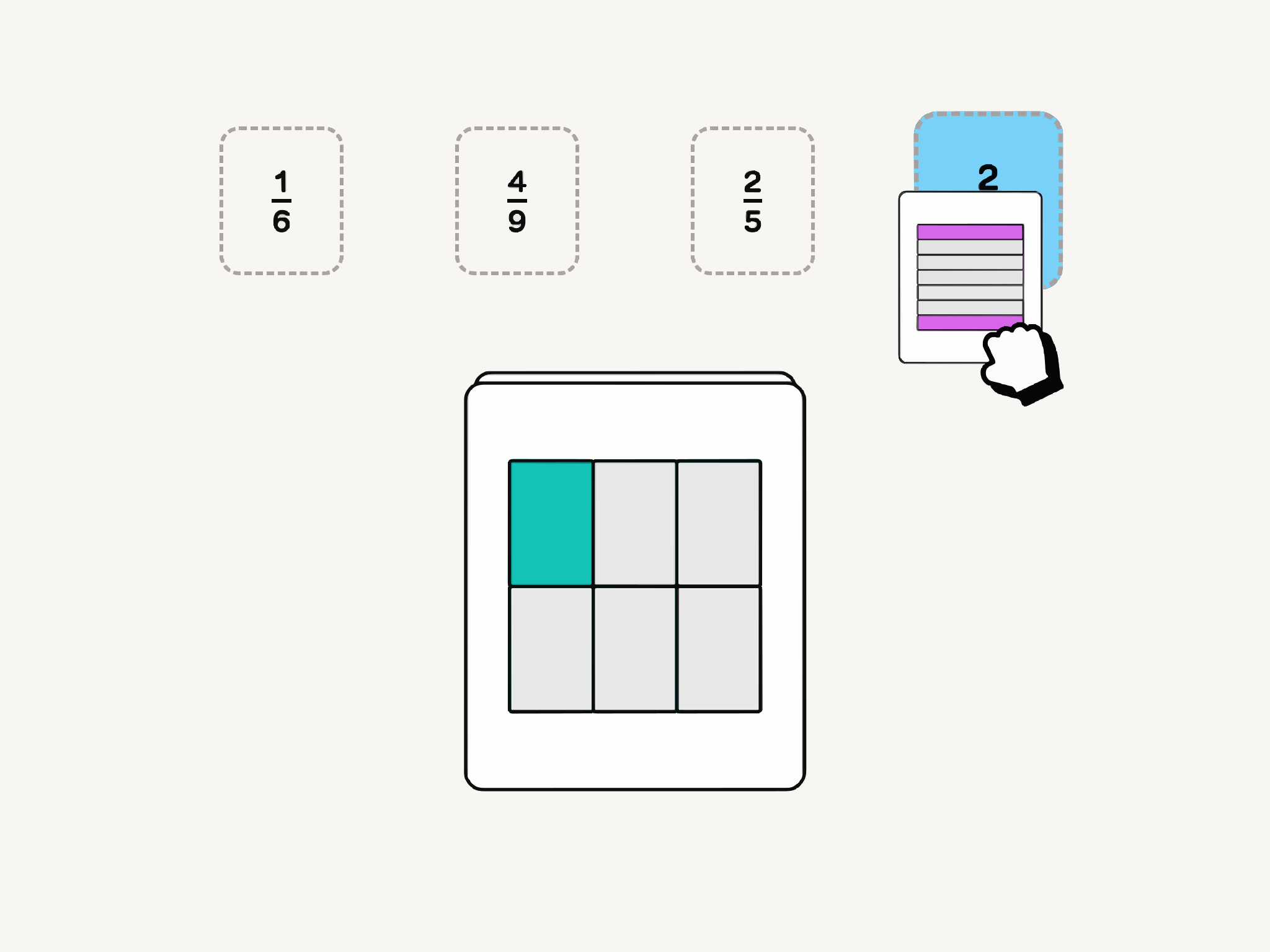
One whole can be two halves. But it can also be a half, a third, and a sixth. When students work with Struggly tasks like Fraction Balls, Slice ’n’ Dice, or Sort It Out Fractions, they encounter fraction relationships through shapes, number lines, sets, and symbols.
The math hasn’t changed. The way students are seeing it has.
This is an important part of the multidimensional view of mathematics that Jo Boaler has written about. Students benefit from making connections among visuals, numbers, symbols, words, and different ways of representing the same idea. Those connections matter for fluency because they give students somewhere to go when they get stuck. If a student can’t immediately recall 9 × 12 but understands multiplication relationships, the thinking doesn’t have to stop.
(3) What do you already know that could help you?
This may be one of the most useful questions we can ask when a student gets stuck.
Instead of giving them the first step, bring them back to something they already understand.
Imagine a student solving 49 × 6. If they see 49 × 6 as one calculation they have to remember how to do, they may immediately reach for an algorithm.
But a flexible thinker might notice that 49 is close to 50
50 × 6 = 300
Subtract one group of 6
300 − 6 = 294
That student isn’t avoiding computation. They’re using number relationships to make the computation easier.
As math becomes more complex, this kind of thinking becomes even more important. Fractions, multi-digit operations, and eventually algebra require students to adapt what they know and connect ideas in new ways. When students regularly ask themselves, “What do I already know that could help me?” math starts to feel less like a collection of facts and procedures they either remember or don’t.
It becomes something they can figure out.
Start building flexible thinkers tomorrow
You don’t need to redesign your math block to start building more flexibility. Incorporate these three simple questions into your practice:
- How do you see it?
- Can you show it another way?
- What do you already know that could help you?
Then give students time to share the different relationships, strategies, and representations they noticed.
Because fluency isn’t simply about knowing more answers. It’s about having more ways to think.
Explore flexibility with Dr. Jo Boaler
Want to go deeper into what it looks like to build flexible, confident mathematical thinkers?
Watch Struggly co-founder and Stanford professor Dr. Jo Boaler as she shares about Flexibility and Courage: Rethinking What It Means to Teach and Learn Mathematics.
Jo explores why there is no single “right” way to teach or learn mathematics, and how flexibility helps teachers choose the approaches their students need while helping students see connections, adapt strategies, and approach mathematics in different ways.