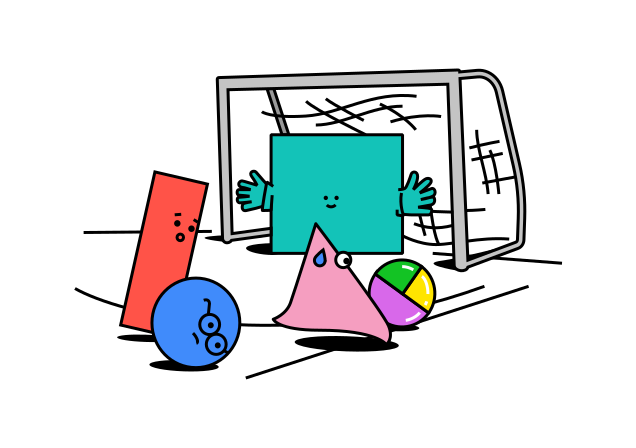
We’ve all seen it: a student stares at a math problem, freezes, and immediately asks for help. Or worse—sees they made a mistake and erases a completely reasonable attempt because it wasn’t “right.”
Between ages 7 and 14, social comparison skyrockets. Kids start watching who finishes first, who gets the high score, and who gets stuck. Because traditional math instruction has long prioritized speed and correct answers above all else, far too many students decide early on that they simply aren’t "math people."
But what if we helped students see mistakes and challenges as valuable parts of learning math?
A few intentional, everyday shifts can help minimize math anxiety and transform mistakes into celebrations of brain growth.
Move 1: Reframe mistakes as evidence of brain growth
Before students can embrace mistakes, they need to know what actually happens in their brains when they hit a wall.
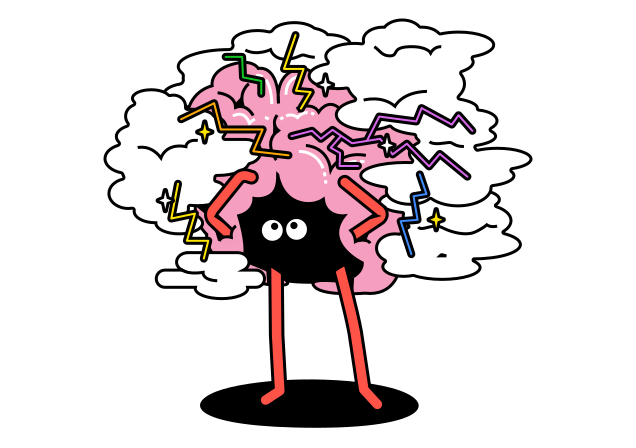
Neuroscientific research highlighted by Dr. Jo Boaler (founder of Stanford’s Youcubed and co-founder of Struggly) shows that the brain fires when a student makes a mistake—even if they aren’t aware they made one yet. Struggling isn't a sign of failure; it is the physical process of learning.
“The brain grows most when we are challenged, when we make mistakes, and when we struggle. If you are not struggling, you are not learning new things.”
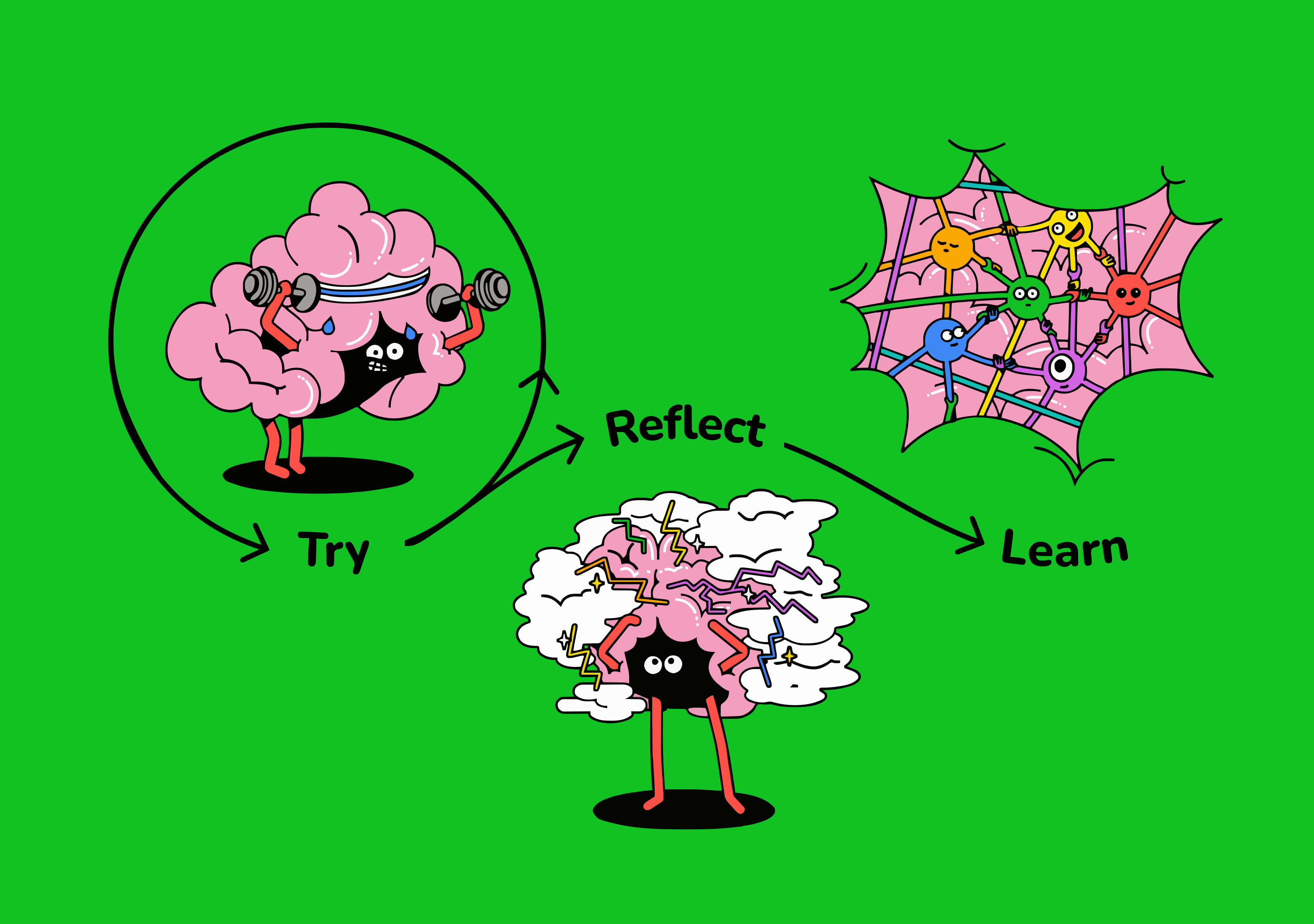
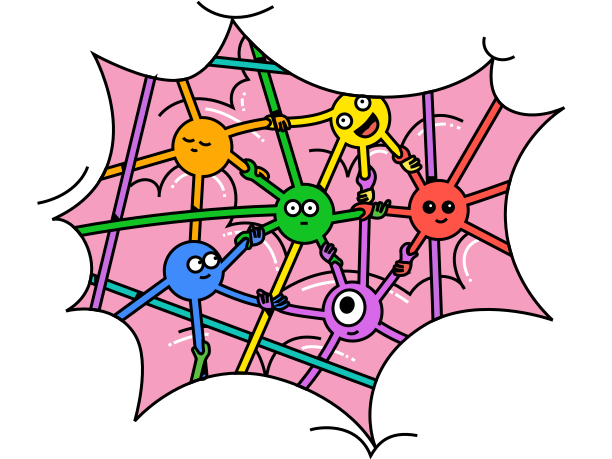
Like building muscle at the gym, your brain builds new neural pathways when pushing through hard problems. Easy problems keep existing pathways unchanged—challenging problems grow your brain.
Try a mini-lesson: Share this concept with your class at the start of the week. Frame confusion not as a red flag, but as the literal sensation of the brain rewiring itself.
Move 2: Turn errors into sense-making experiences
Telling kids that “mistakes help us learn” isn’t enough on its own. As researcher Dr. Michael Jarry-Shore points out, teachers have to notice when students are struggling and respond in ways that keep them thinking, rather than rushing in to fix it.
When a student’s attempt misses the mark, resist the urge to jump in with an answer. Keep their work visible, pause, and prompt the student (or class):
- "What do you notice happening here?"
- "What did you expect to happen versus what actually happened?"
- "What is this work telling us to try next?"
By shifting from correcting to inquiring, students stop guessing what you want to hear and start analyzing their own reasoning.
When math is a race to the right answer, a mistake feels like a roadblock. But when math is about reasoning and sense-making, a mistake gives students something genuinely worth thinking about.
Move 3: Provide space for real exploration
Timed tests, worksheets, and answer-getting digital practice tools leave zero room for conceptual discovery. To support direct instruction and normalize mistake-making, students need tasks designed for experimentation.
This is why we created Struggly. We wanted to give teachers a simple way to bring visual low-floor, high-ceiling math tasks into everyday instruction.
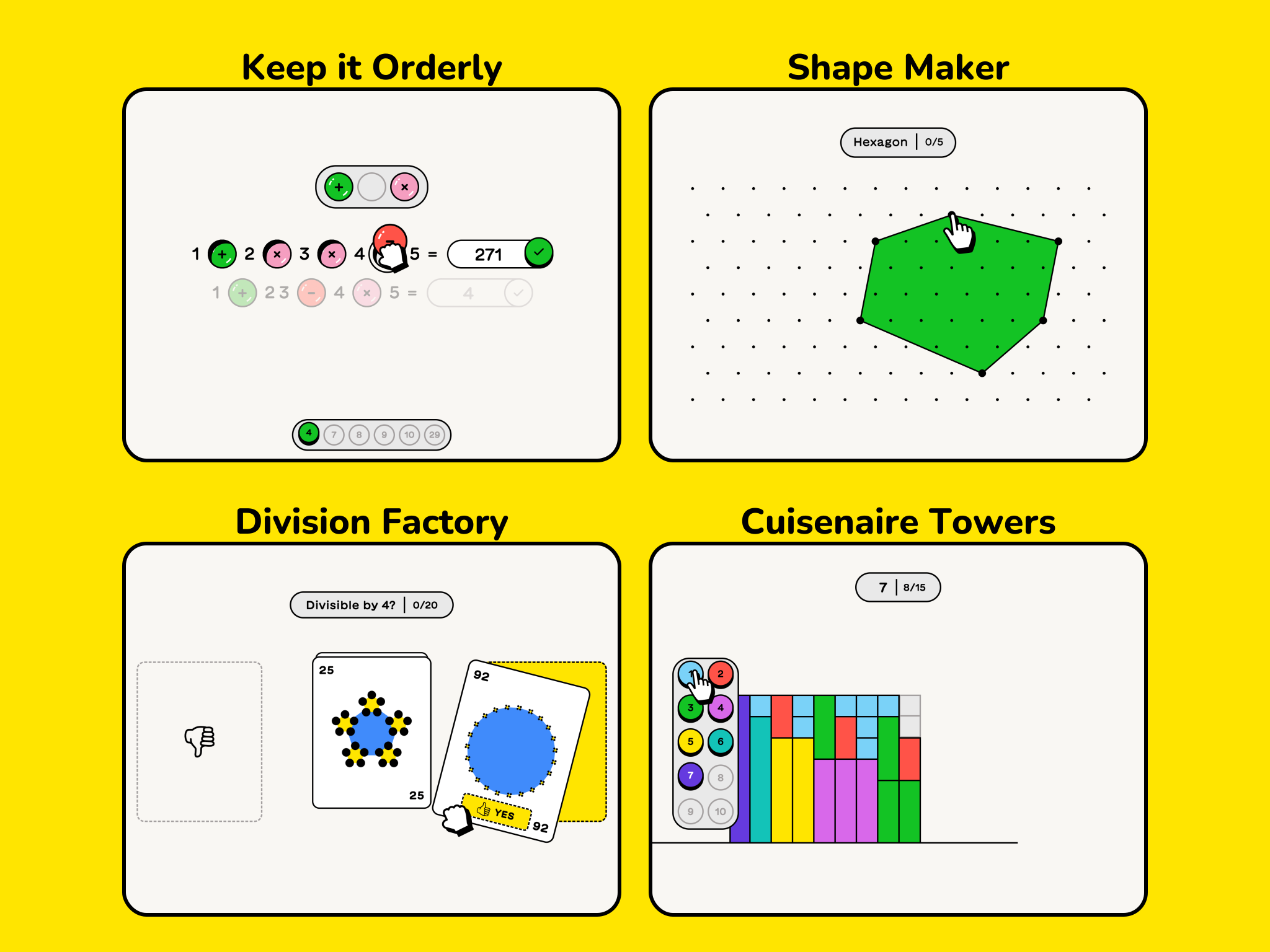
Because Struggly tasks do not have written directions by design, students are freed from searching for "the rules." Instead, they dive in, try strategies, make mistakes, and adjust. Mistakes become low-stake puzzle pieces rather than high-stake failures—leading to rich classroom discussions about where they got stuck and how they figured it out.
The bottom line
How we respond to errors changes everything. When an unexpected answer pops up, keep it visible. Give your students room to think, talk, and revise.
The magic isn't in making the mistake—it’s in what we choose to do next.
References & Further Reading
- Boaler, J. (2016). Mathematical mindsets: Unleashing students’ potential through creative math, inspiring messages and innovative teaching. Jossey-Bass.
- Moser, J. S., Schroder, H. S., Heeter, C., Moran, T. P., & Lee, Y.-H. (2011). Mind your errors: Evidence for a neural mechanism linking growth mind-set to adaptive post error adjustments. Psychological Science, 22(12), 1484–1489.
- Jarry-Shore, M., & Richardson, A. (2024). Noticing struggle during collaborative problem-solving in the middle-school mathematics classroom. Journal of Mathematics Teacher Education.
- Jarry-Shore, M., Ramos-Duke, M., & Womack-Adams, K. (2026). “I’m stuck”: Critical junctures when teaching mathematics that is responsive to student thinking. The Elementary School Journal, 126(4), 645–671.